
Welcome to our website for descendants of former prisoners of Sachsenhausen concentration camp and its satellite camps
Here, you will find information about visiting the memorial site, tips for researching your relatives, opportunities to network with other descendants, and other relevant organizations.
This site reaches out to all relatives— regardless of which generation you belong to, what your relationship is, and how much information you already have. Each person and each family has individual experiences, questions, perspectives, and feelings.
Is there a special tour for descendants?
Sachsenhausen Memorial offers individual guided tours for people with a personal or familial connection to Sachsenhausen concentration camp (or the Soviet special camp). Where possible, these tours focus on the prisoner or group of prisoners in question and provide an opportunity for personal questions and stories. Please contact us for an individual consultation!
You can also visit the memorial on your own at any time with an audio guide or as part of a public tour.
Further information can be found here.


How can I obtain information from the memorial’s resources?

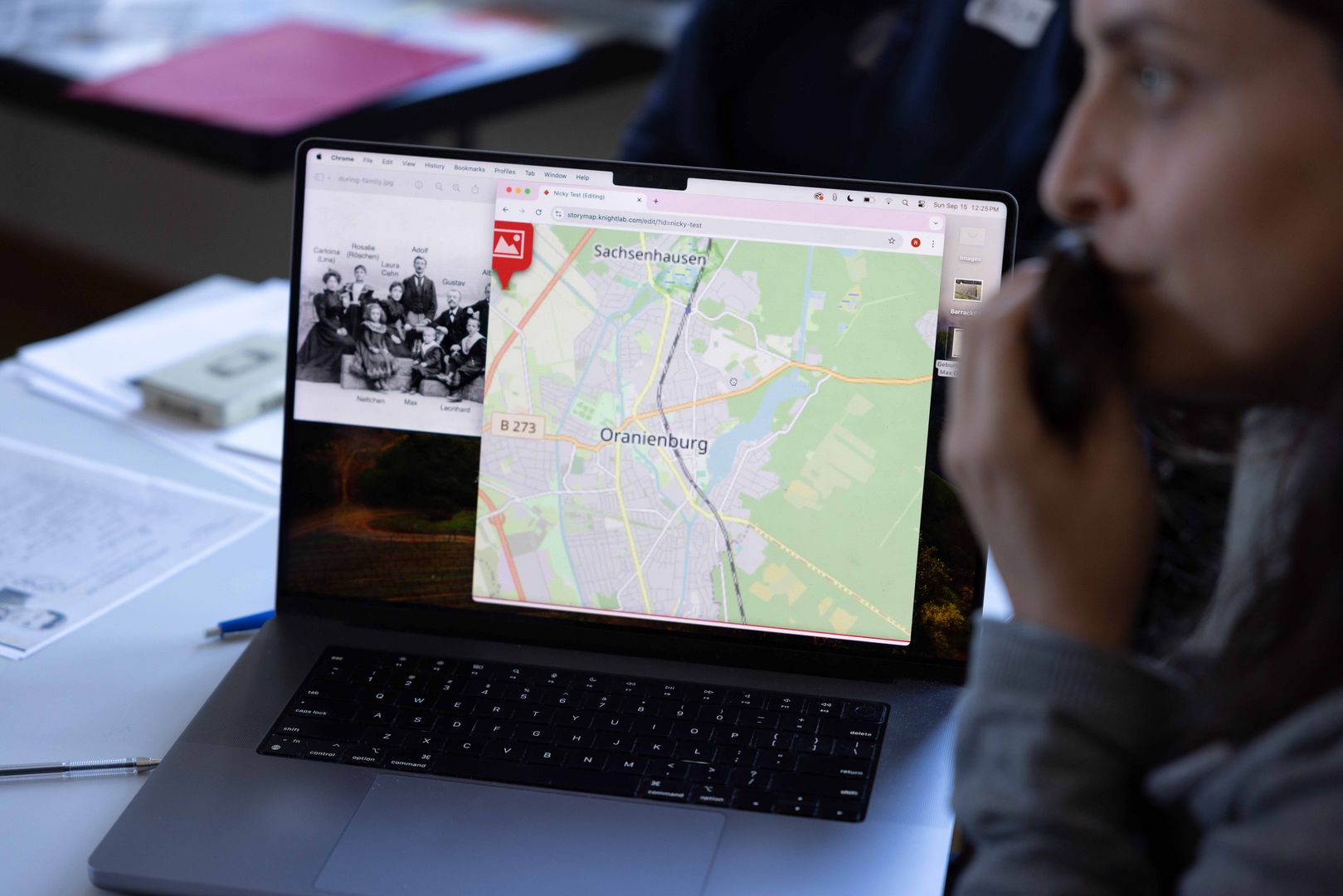
Sachsenhausen memorial has its own collection. It was established during founding of the Sachsenhausen national memorial in 1961 and is constantly being expanded.
The collection is divided into four areas:
Please send any inquiries about a specific person directly to our archive.
Alternatively, you can fill out our online inquiry form for researching former prisoners of Sachsenhausen concentration camp.
The archive’s staff will contact you. Unfortunately, information is not available on all prisoners, as many documents have been destroyed or lost. However, the staff will compile all available information. Thorough research takes time, and we are committed to providing you with as much meaningful information as possible. Due to the high number of inquiries, it may take some time before you receive a response.
An appointment must be made in advance to visit the archive and meet with staff on site.
Initial online research is currently possible in the “Book of the Dead. Sachsenhausen Concentration Camp 1936–1945,” which is available in German, English, Polish, and French. It lists the names of almost 22,000 victims of Sachsenhausen concentration camp, who are only a fraction of those murdered.
The online database “Book of the Dead. Soviet Special Camp 1945–1950” allows you to search the names and data of 11,889 people who died in Soviet Special Camp No. 7/No. 1 in Weesow and Sachsenhausen.
What other options are there?
A good starting place for your research is the state and local archives where the person in question was born, lived prior to their imprisonment, or after 1945. In your inquiry, you should request all available records of the person in question and mention that you are their relative.
Further important archives where it may be worthwhile to conduct an online search or on site research include:
Arolsen Archives (more than 40 million Nazi documents)
The Federal Archives (personal and family research)
Yad Vashem (names and biographical information of millions of Holocaust victims)
Website “Mapping the Lives” (you can search for people and addresses)
Where can I find literature on this topic?
There are many different publications on the history of Sachsenhausen concentration camp: reports by survivors, newspaper clippings, historical sources, and academic research. You can use the online catalog of the “Working Group of Memorial Libraries” for your search.
How can I get in touch with other descendants?

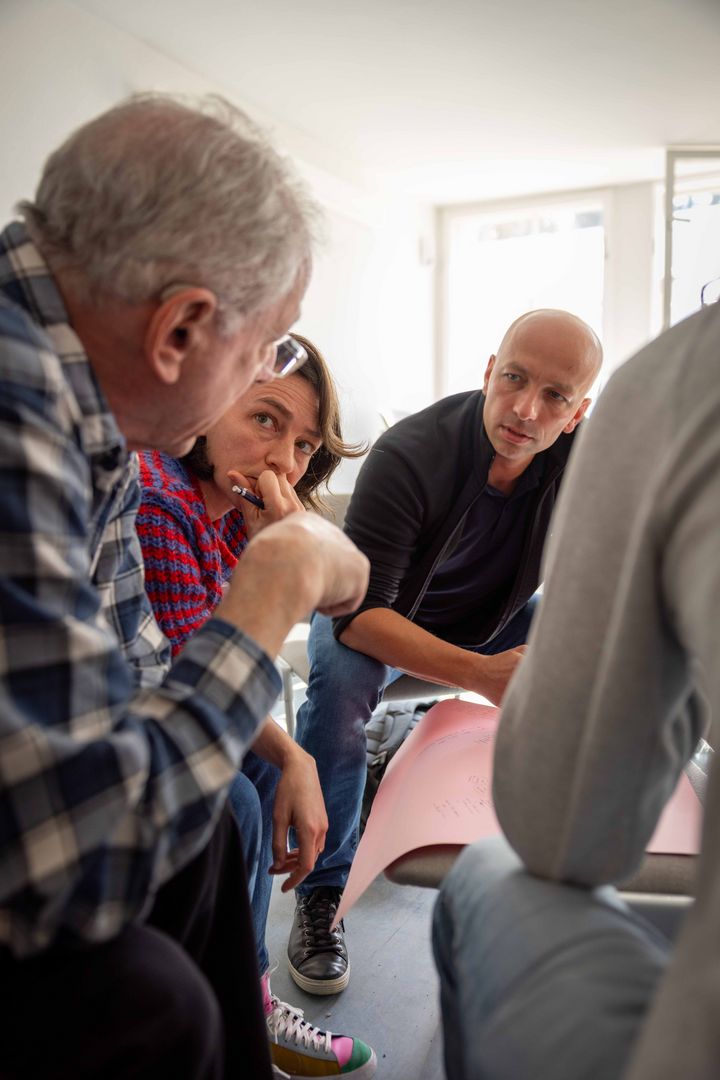
If you want to exchange ideas and network with other descendants, there are various options available:
Since the end of 2021, Sachsenhausen memorial has been running the website “Voices of the Next Generations” in cooperation with around 20 descendants of former prisoners of Sachsenhausen concentration camp. The website collects the voices of descendants in the form of individual impressions, stories, artwork, music, films, and other media. The group remains active; contact information can be found here.
“Sachsenhausen Stuff” is a new networking service offered by participants in the descendants’ project “What voice do we have?” The group first came together in the autumn of 2024. You can contact them here. Members of the group have also developed the podcast “Descendants Stuff.”
Long-standing interest groups representing former prisoners of the Sachsenhausen concentration camp and their relatives include the International Sachsenhausen Committee (ISK) and the German Sachsenhausen Committee e.V. The ISK was founded in the mid-1970s, and its German branch was established in 1997.
In addition, the association “Friends of Sachsenhausen Memorial and Museum” supports the memorial’s work. Many relatives are also members of the association.
The Friends Association and the International Sachsenhausen Committee host a gathering twice a year for relatives of prisoners who were held at Sachsenhausen. The meetings take place on January 27 and on the anniversary of the liberation of Sachsenhausen concentration camp. Those interested should contact: foerderverein-sachsenhausenapateseode
Where can I find support?
If you are seeking psychological support, these organizations may offer counseling:
The Central Welfare Office of Jews in Germany (ZWST) is the social umbrella organization of Jewish communities in Germany.
AMCHA Deutschland e.V. was founded in 1988 and deals with various issues: trauma and the consequences of persecution, the promotion of mental health, education, and mediation.
The Federal Association Information and Advice for Survivors of Nazi Persecution (Bundesverband Information & Beratung für NS-Verfolgte e.V.), based in Cologne, represents the interests of all victims of Nazi persecution and has been working intensively for years on the situation of the descendants of survivors.
The Study Group on Intergenerational Consequences of the Holocaust deals with the intergenerational consequences of the Holocaust on the descendants of victims/survivors and perpetrators/followers. Regular in-person and online group meetings provide a forum for discussing biographies, Nazi-related topics, films, and books.
There is no psychological support available on site at the memorial.
Exhibition “Entangled Pasts. Descendants speak”


The exhibition was created as part of the networking project “What Voice Do We Have?” between relatives of former prisoners of Sachsenhausen concentration camp and Sachsenhausen Memorial.
The experiences of exclusion, persecution, and violence under National Socialism continue to resonate within the families of those affected to this day. “Entangled Pasts” accompanies descendants on their search for their own family history and brings this process of remembrance to light.
The exhibition can be visited during the memorial’s opening hours in Barrack 39.
Interviews
The interviews with descendants of former prisoners of Sachsenhausen concentration camp were conducted in 2024 and 2025 at Sachsenhausen Memorial as part of the project “What voice do we have?”.
The interviews with Alisa Smith, Nicole Wines, and Insa and Hilger Voss, as well as the podcast episodes featuring Jakob Feisthauer, Julie Somers, and Kelsey Snook, are part of the exhibition “Entangled Pasts. Descendants speak”.
Interview with Alisa Smith, granddaughter of Fritz Neuhaus
Alisa Smith’s grandfather Fritz Neuhaus was arrested during the November Pogroms of 1938 and sent to Sachsenhausen concentration camp.
Interview with Nicole Wines, great-granddaughter of Max Düring
Nicole Wines’ great-grandfather Max Düring was arrested during the November Pogroms of 1938 and imprisoned in Sachsenhausen concentration camp.
Interview with Insa and Hilger Voss, great-grandchildren of Clemens Paul Feige
Insa and Hilger Voss’s great-grandfather Clemens Paul Feige was imprisoned in 1938 at Sachsenhausen concentration camp as part of the “Aktion Arbeitsscheu Reich” campaign.
Interview with Guillaume Ansaloni, grandson of Hubert Dupuy
Guillaume Ansaloni’s grandfather Hubert Dupuy, a French prisoner, was imprisoned in Sachsenhausen concentration camp from 1943 to 1945.
Interview with Rebekka Kohn, granddaughter of Isak Kohn
Isak Kohn is Rebekka Kohn’s grandfather. In August 1944, he was sent from Auschwitz to Lieberose sub camp as a Jewish forced laborer. In February 1945, he was transferred to Sachsenhausen and from there to Mauthausen concentration camp in Austria.
Podcast with Julie Somers and Kelsey Snook, grand- and great-granddaughter of Max Feybusch
Max Feybusch, grandfather and great-grandfather of Julie and Kelsey, was arrested in June 1938 during the “Aktion Arbeitsscheu Reich” campaign and imprisoned in Sachsenhausen concentration camp.
Podcast with Jakob Feisthauer, great-grandson of Heinrich Feisthauer
Jakob’s great-grandfather Heinrich Feisthauer was arrested in June 1938 during the “Aktion Arbeitsscheu Reich” campaign and imprisoned in Sachsenhausen concentration camp.
